
KNOX
COMMUNITY
STREET
DANCE
Knox Community Street Dance (KCSD) is a community-driven dance and social aid club that shares a love for street dance, play, and justice. Our collective does not consider ourselves authorities but instead consider ourselves community artivists in learning. We aim to use the tools of street dance culture to spread joy, history, and knowledge of movement and storytelling.
VISION
Creating movement spaces for people to celebrate, engage, and learn the customs and culture of street dance as a way to explore and connect to history, community, self, and environment.
MISSION
To foster community-driven actions that advocates for somatic healing and physically taking up and reshaping spaces in joy.
WHAT COUNTS AS STREET DANCE?
We acknowledge foundational “street dance” culture, Funk & Hip-Hop Theory, and movements developed by Black and Soulaan peoples and its connected foreparents, descendants, and customs.
We acknowledge the reality that street movement can also exist within other cultures and fusions like martial arts, flow arts, Bhangra, etc.
We acknowledge ‘the street’ has been a space and place for dancers who cannot not afford or feel accepted to train at traditional studios, so they must do ‘traditional studio styles” elsewhere.
KCSD invites all forms of creativity and history the streets bring– ALL STYLES AND PEOPLE ARE WELCOMED.
VALUES
- We acknowledge The 5th Element of Hip-Hop: Knowledge by learning the roots of Black & Soulaan history and culture within street dance customs as well as set the same standard of learning for other cultural street and movement styles explored.
- We provide programming that can provide embodied experiences for Black & Soulaan peoples learning their culture as well as facilitate connective cultural exchange with other community members who are seeking to participate intentionally and thoughtfully with the subject.
- We foster an environment of collaboration and cultural diversity that promotes openness, fellowship, and a communal spirit. We do not tolerate persecution or hate of any kind.
- We encourage community members to experiment and craft movements and spaces as well as share their creativity with others.
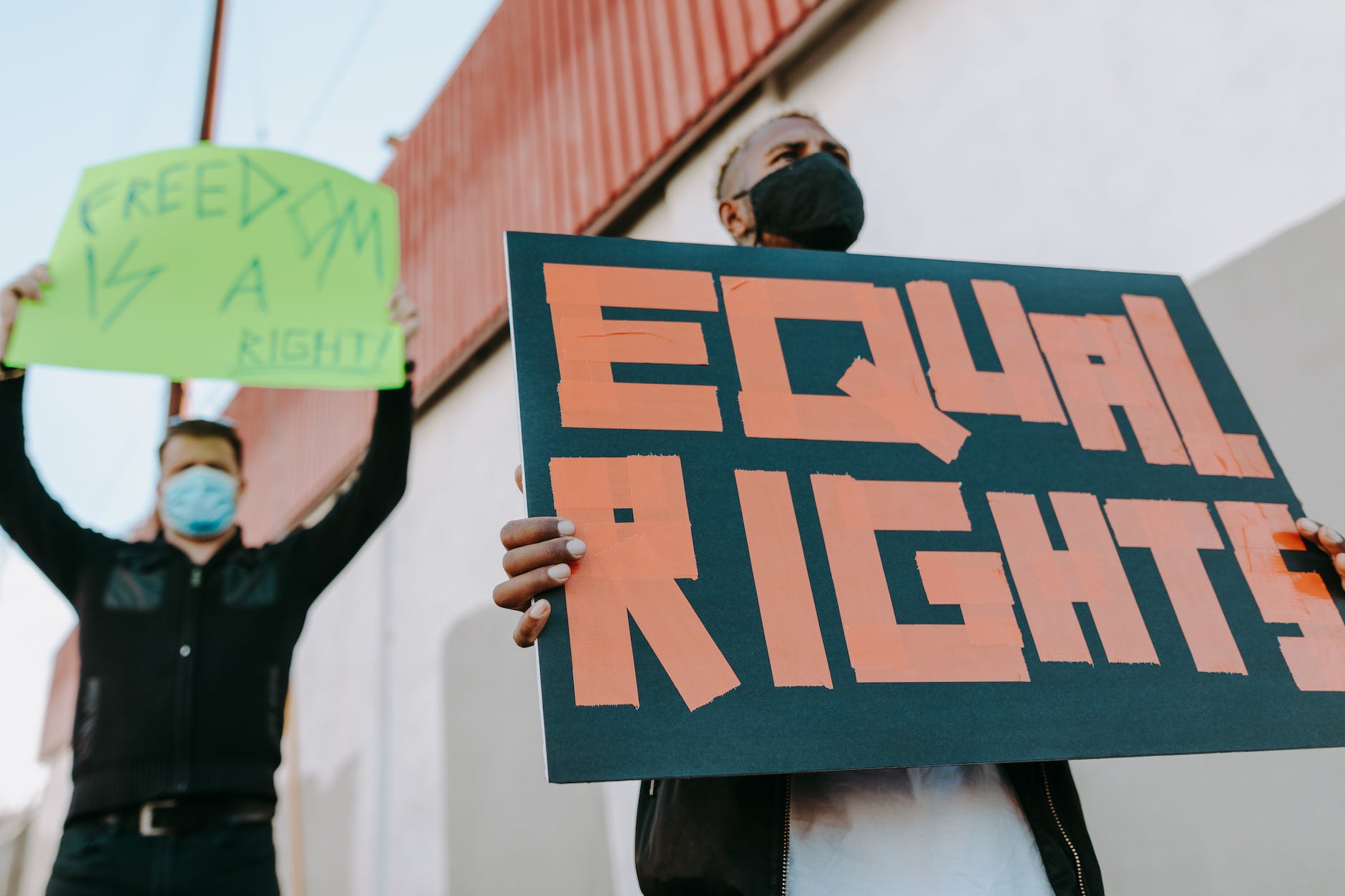
- We believe dance and joy is a powerful activism tool that can be used as a vehicle for community health, social justice, and environmental advocacy.
- We advocate for the fair treatment, appreciation, and compensation of street artists and that their time, craftsmanship, and talent to the community are valued and respected.
- We uplift our Appalachian and Southern roots and seek to recognize and share the impact our history and innovation has brought to other cultures nationally and globally.
WHAT WE DO
Knox Community Street Dance is a local, community-driven effort. Programs are hosted based on club members’ availability. Check the schedule or social media accounts to see the latest events. If you’re looking to collaborate or have us host an event, please contact us at knoxcommunitystreetdance@gmail.com.
Community Jams
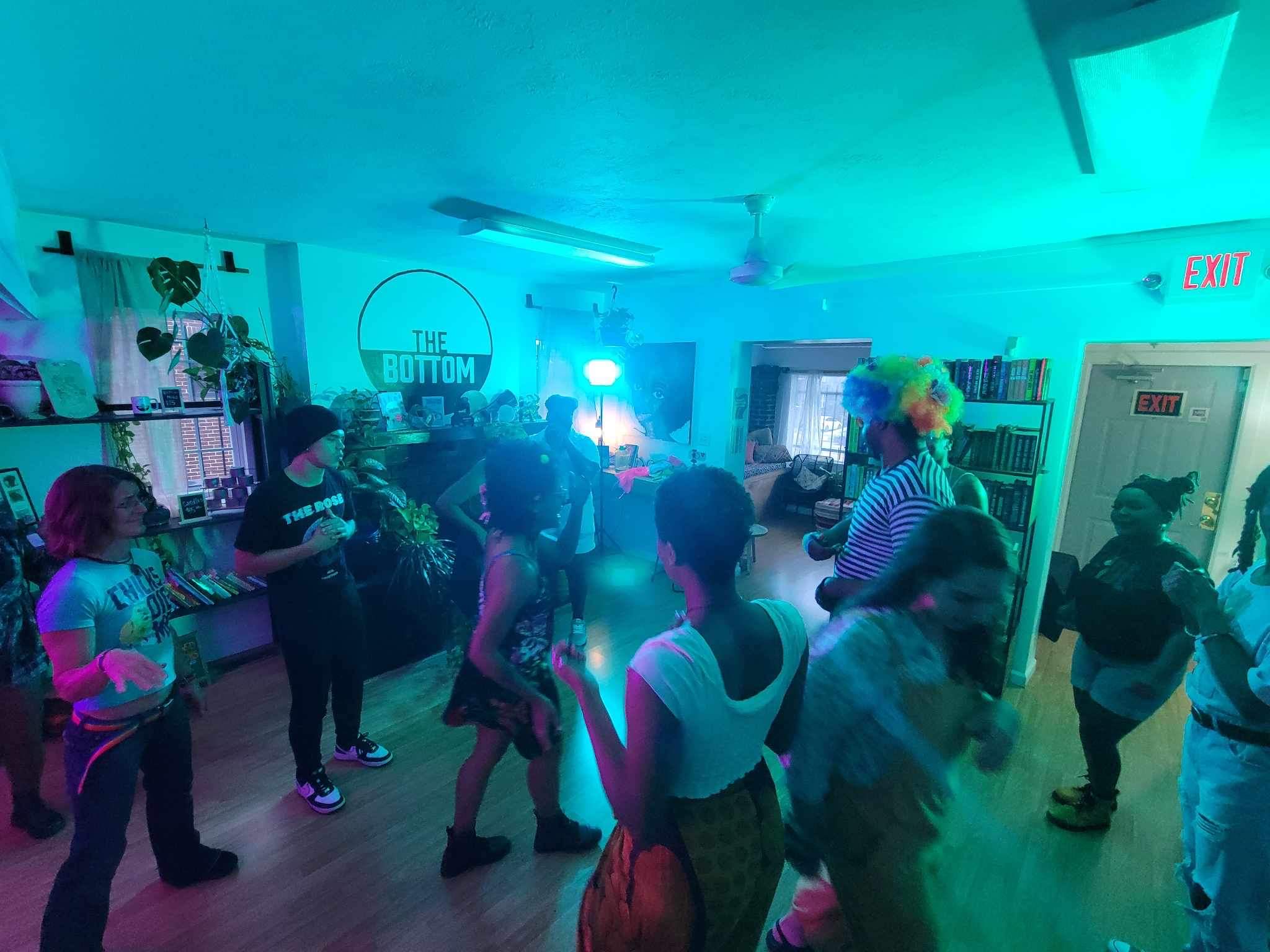
Community Jams are triannual party activism events where community is invited dance for a cause.
Screenings
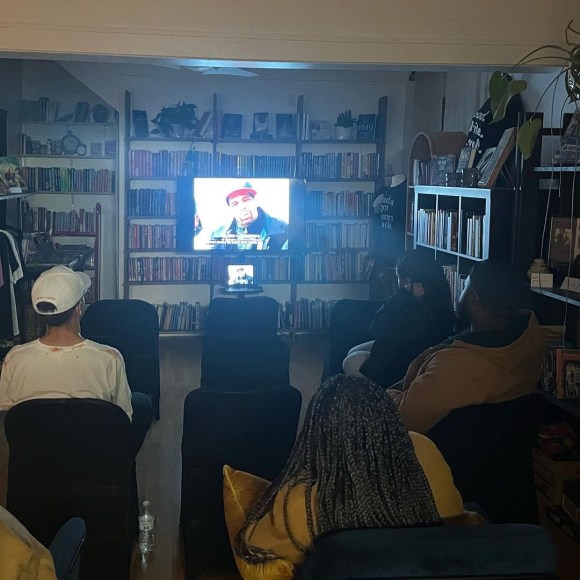
Screenings feature documentaries, dance-alongs, tutorials, or videos on street dance culture and its connected histories.
Classes
Classes are led by collective members or visiting movement artists to bring dance classes or group training for the community.
Open Seshes
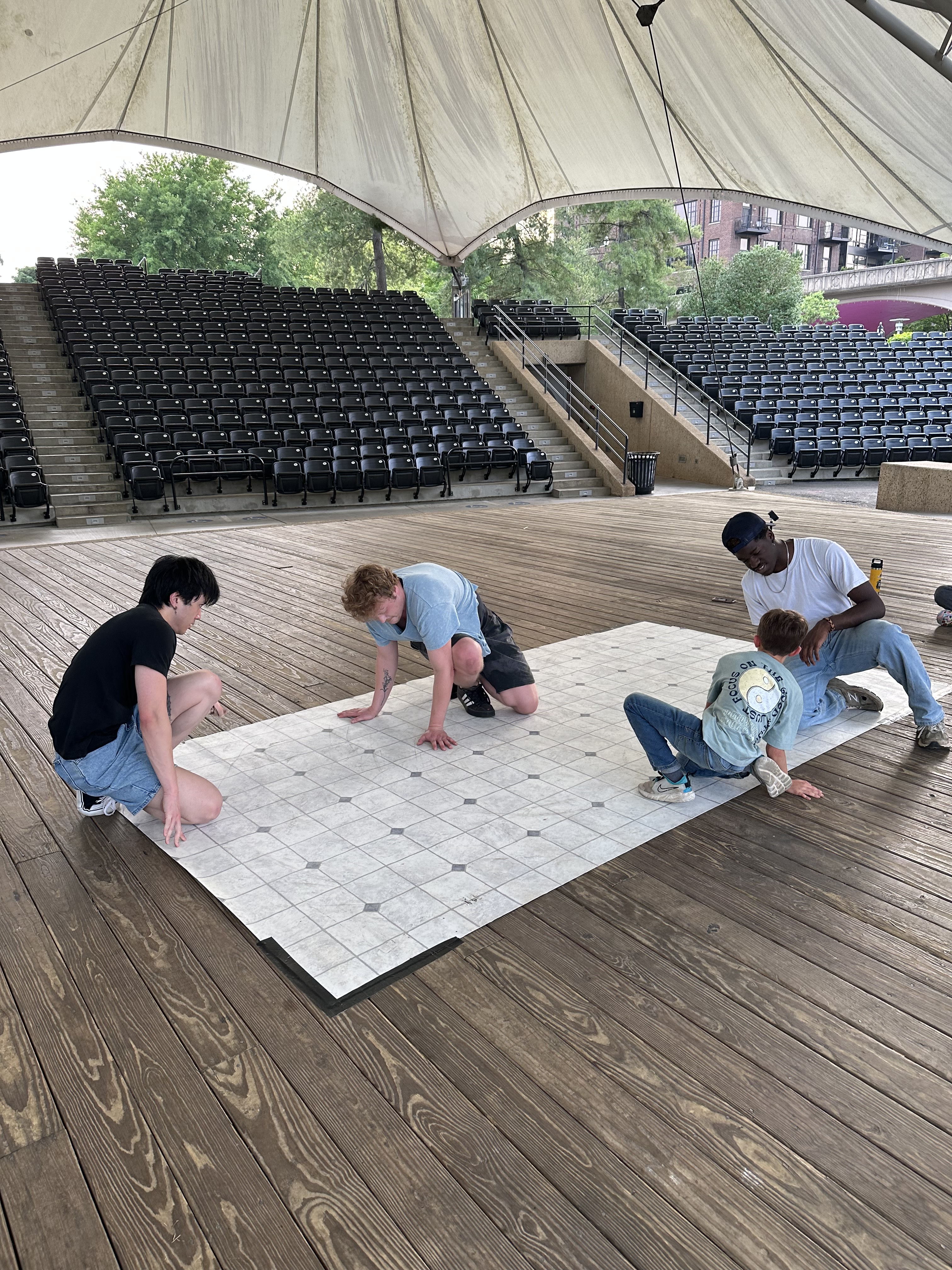
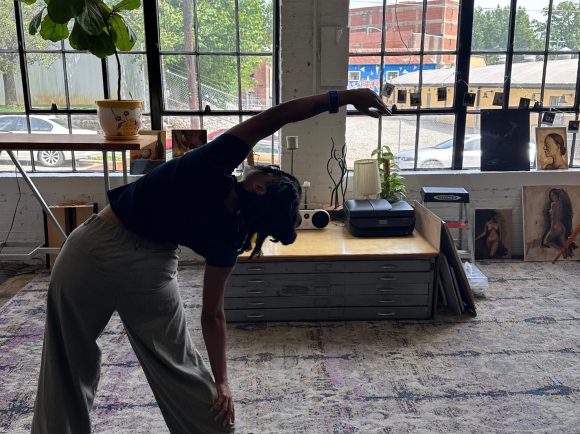
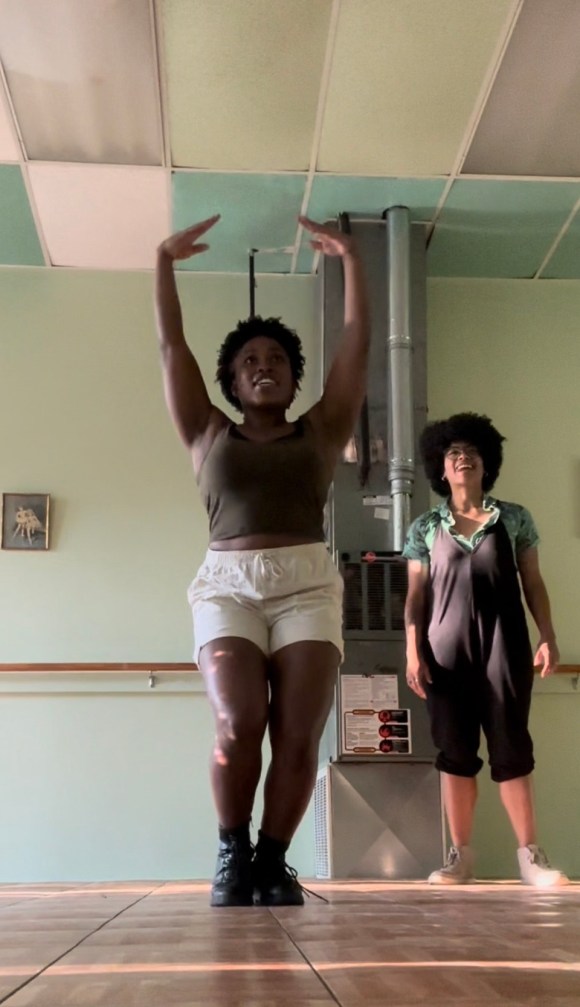
Open Seshes are unstructured and nonjudgmental times to work on your moves and share your knowledge and skills
WHY WE MOVE
What is “street dance” and how does it connect to hip-hop dance and Black & Soulaan Culture and History?
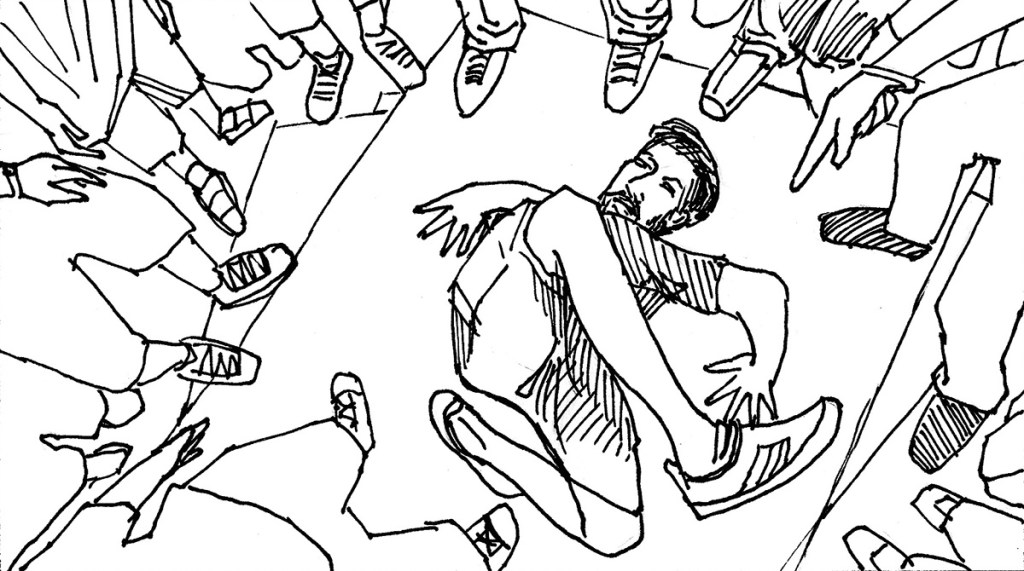
Photo: Patrick Riley, Crack the Cypher
Street dance is an umbrella term for dance styles that have their origin outside the dance studio. Styles of street dance developed in any available open space, such as streets, house parties, block parties, parks, school yards, raves, and nightclubs. Street dance has deep historical and social roots in Black & Soulaan Culture and History, having emerged in these communities in the US during the 1970s. The movement created allowed many in the community, especially marginalized peoples, to have an outlet to express themselves and use their bodies as a way to communicate their struggles, passions, and their push for freedom.
Using physical movements like dancing to empower and liberate in moments of high tension is a tradition that goes back to the earliest days of Black & Soulaan History. During chattel slavery, enslaved Black people used dance and sound to create a common language and use it for the good of community and culture-building when their ancestral languages and traditions were stripped from them.
The Charleston dance that swept the nation in the “Roaring Twenties” and upended the accepted dance rules at the time has origins in the movement of the descendants of Africans who were enslaved on the rice, indigo and Sea Island cotton plantations of the lower Atlantic coast. A band of Black orphans performed Gullah, or as it was called “geechee” music, traveling to raise money to survive and share the joyful and infectious movements of their ancestors, crossing it into the mainstream.
The music and movements of soul that originated in Black & Soulaan communities in the 1950s communicated ideas of equality and Black pride. Artists like Sam Cooke, James Brown, and Marvin Gaye attained the summits of economic success while Black listeners found a solace in the music to gain a voice of purpose, unity, and endurance. The famous song “Dancing in the Street”, by Martha and the Vandellas, about the joyousness of dance, became the anthem for the Civil Rights Movement as many heard it as a call to action to advocate for their human rights.
Like their ancestors, the pioneers of street dance followed in the traditions of the movers and shakers who came before them. Street dance (specifically breaking) was identified as one of the five original elements of hip-hop culture. The fifth element, which is rooted in every element, is knowledge. Knowledge of the historical liberation movement and why it’s important to use the multifaceted and intersectional artistry, experience, and wisdom of Black & Soulaan Culture and History to advance and stand up for our freedoms and right to flourish and grow in our environment.
Due to street dance being a hip-hop element, street dance movement was naturally included in hip-hop dancing, which included a wide range of street styles notably breaking*, locking, and popping. The television show Soul Train and the 1980s films like Breakin’, Beat Street, and Wild Style showcased these street styles in their early stages; therefore, giving it mainstream exposure.
Through this exposure, the moves of hip-hop dance became a worldwide, household sensation. We now see movement that started historically and is still currently being developed in the stomping grounds of Black & Soulaan communities being performed by celebrities, competition shows like World of Dance, influencers on Tik Tok, politicians, and even by avatars in popular videogames like Fortnite.
As everyone enjoys and partakes in this form and culture of dance, it’s important to recognize the roots of the philosophy, movement and practices that street dance and hip-hop dance embodies as well as recognize both the ancestors that utilized and today’s living communities that currently utilizes the joy of dancing as resistance and liberation from oppression.
*NOTE: Breaking and early hip-hop were co-creative inventions of Black/Soulaan and Latino/x communities. To learn more about this, check this out: https://hiplatina.com/b-boys-b-girls-dance-hip-hop-breakdancing/
If you know of any Street Dance Latino/x experts and/or enthusiasts in the Greater Knoxville area, please connect us through knoxcommunitystreetdance@gmail.com.
Why do we jam?
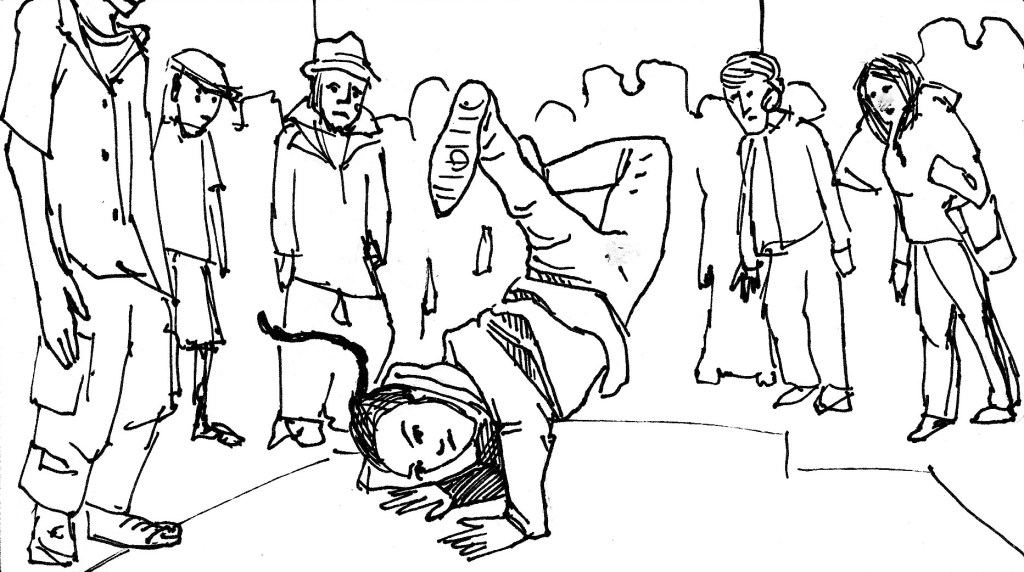
Photo: Patrick Riley, Crack the Cypher
Jamming is not new. It’s a historic and cultural practice that can be traced back for years. From parties and clubs to people just grooving together and exchanging in circles, it is a time and space to communicate and engage with others through movement.
When people bring their unique style of dance to a jam, it creates a communal environment that encourages kinship, somatic movement, raw creativity, and joy.
All styles of dance are welcomed at community jams, but at Knox Community Street Dance, we do recommend and encourage participation in one or more of the following street dance practices:
Labbing
Labbing or Lab comes from the word “laboratory”. Like what you would do at a laboratory, labbing is where a dancer experiments, hypothesizes, and creates movement or skills.
To start labbing, we suggest doing the following:
- Identify what you want to work on
- Take note of what is constraining or affecting your movement
- Identify a goal or benchmark you want to achieve
- Start Experimenting
Exchange
Exchange is the practice of sharing knowledge or movement with each other. If you see another dancer working on something or does a move that you would like to learn, ask if they are willing to teach you. Maybe you have something you can teach them back? (But it’s not required for anyone to teach!)
Another way you may exchange is coming up to a dancer and moving or grooving with them. This can be another way to share or exchange movement.
Cypher
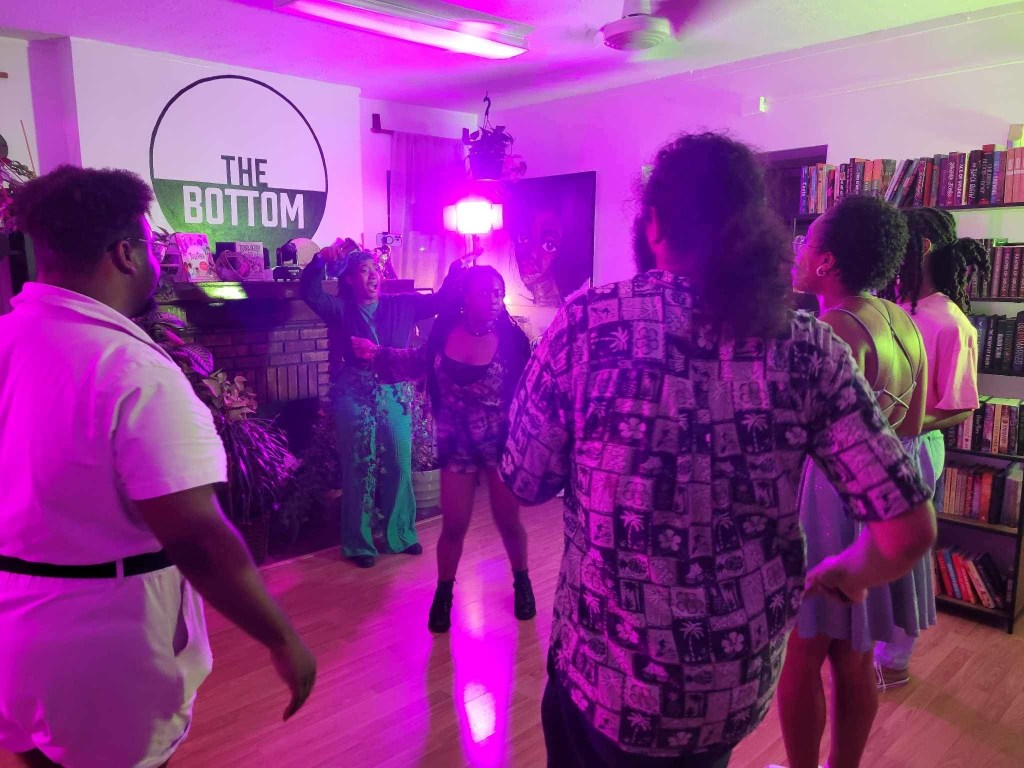
A cypher is a freestyle dance jam where an open circle is created and people take turns dancing in the center. Knox Community Street Dance likes to end every community jam with a cypher. The cypher (or cipher) has deep, long-standing cultural roots in hip-hop culture, African tradition and even religious beliefs.
The shape of the circle itself has profound meaning in many cultures, as it is often an inclusive universal symbol representing concepts of wholeness, the pursuits of peace, a true sense of self, the eternal, cyclic movement, etc. When people gather in a circle, it can mean community needs are being expressed, a form of human expression is being displayed, and sometimes it can be how spiritual connection is achieved– like through prayer circles.
The cypher, in hip-hop culture, has been used to counter social oppression and facilitate empowering and liberating movements for generations. When we cypher at Knox Community Street Dance, we participate in activism by advocating for bodily healing and physically taking up and reshaping spaces in joy.
Follow Us!
Stay in the know about everything Knox Community Street Dance is doing
 Knox Community Street Dance